

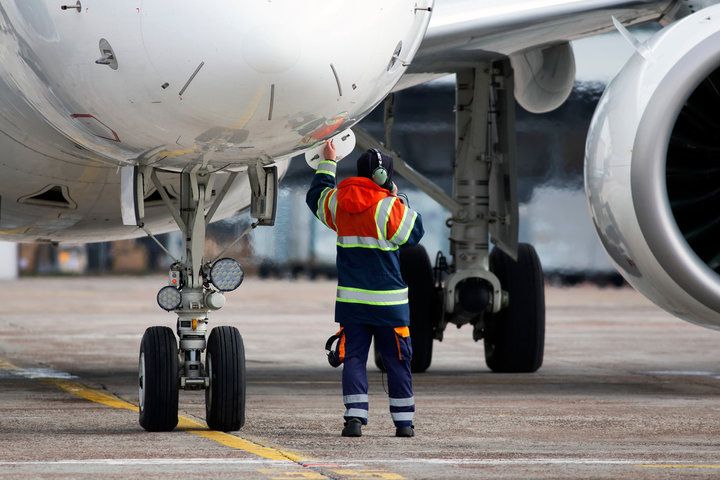
When an aircraft enters AOG (Aircraft On Ground), a race against time begins. Every minute matters, but an AOG is not just about speed: it is speed with control, because any deviation can compromise airworthiness and flight safety.
What does AOG mean in aviation?
When an aircraft enters AOG status, a top priority protocol is triggered. The objective is one: to restore the aircraft's operability in the shortest possible time. This means mobilizing highly specialized technicians, certified tools, and critical spare parts with no room for errors or delays.
The operational reality of AOG: maximum pressure under minimum conditions
Urgent interventions on the track and adverse environments
Internal MRO maintenance documents highlight that an AOG situation requires immediate deployments, often on the runway, remotely, or in unfavorable conditions
Technicians must work:
- Out in the open
- No immediate logistical support
- With limited resources
- With the requirement to return the aircraft to service in the shortest possible time
But none of that is viable without the right equipment: portable kits specifically designed for AOG missions.
AOG Kits: Portability, ATA Selection, and Design for Urgency
AOG kits are created for fast, safe and traceable interventions, something that is consistently collected in different internal technical documents
Tools selected by ATA chapters
Each kit is configured following the ATA logic so that the technician has only the essentials:
- B1 (mechanical)
- B2 (avionics)
- Cab (ATA 25)
- Electricity (ATA 24)
- Oxygen (ATA 35)
- Structure and Composites (ATA 51–57)
This ensures that the technician travels light but complete, reducing weight, volume and intervention times.
The other essential pillar: total control of the tool
The right tool is only half the challenge. The other half is to ensure absolute control of each tool from the exit of the kit to its return.
Why Tool Control Is Critical in an AOG
Systems such as smart carts, foam trays with dedicated cavities and traceability software prevent a tool from being left behind:
- Lost on track
- Lost in a panel
- Or forgotten inside the aircraft (which would be a very serious operational risk)
This need is clearly mentioned in several corporate solutions focused on the aviation MRO sector, where tool control is an essential part to avoid FOD and ensure airworthiness
In addition, digital traceability—including who uses what, when, and for what—aligns with the security and compliance requirements outlined in MRO and ATA systems.
Travel light, work with precision: the perfect balance
In an AOG situation, the technician must:
- Carry only the essential tools
- With every piece neatly organized
- With kits optimized for mechanics, avionics or cockpit
- With complete certainty that no tool is missing or superfluous
Because an uncontrolled kit adds delays; and in AOG, every extra minute is multiplied in costs, operational repercussions and customer impact.
AOG: When precision, logistics and technical discipline become one
An AOG is not simply an urgent repair: it is an extreme exercise of:
- Technical management
- Perfectly coordinated logistics
- Tool control and traceability
- Operational discipline under pressure
Having optimized AOG kits, certified tools, and robust control systems turns a critical intervention into a safe, efficient, and reliable operation.
And in aviation, that changes everything.